PX+ by GMO is a media that leads businesses to + (growth) through ideas and services to improve PX (Payment Experience, payment Experience).

Security Bulletin

Article published:

What is chargeback? ― Explanation of risks and countermeasures for e-commerce businesses

PX+ Thumbnail Creation Format (1).png

Key points of this article

  1. fraud explains how "chargeback" works when sales are canceled.
  2. Organize serious damage to businesses that result in the loss of both products and prices.
  3. Suggest that multi-layered measures such as identity authentication are the key to protecting revenue.

INDEX

In recent years, with the spread of cashless and the expansion of online shopping, problems such as credit card fraud have increased. Proportionally, the number of "chargeback" cases is increasing year by year. In this article, we will explain the basic mechanism, causes, and effective countermeasures for "chargeback", which is a serious risk for e-commerce businesses.

1. What is chargeback?

1.1. Basic Mechanics of chargeback

chargeback isa mechanism in which the credit card company cancels the sale and refund the end user if the end user (cardholder) does not agree to the payment of the usage fee due to the fraud of the credit card or the damage to the product received.
This mechanism protects the end user from credit card fraud and more. However, from the perspective of the e-commerce operator, the occurrence of chargeback will result in refund processing to the end user, so the usage fee cannot be collected, and the possibility of returning the shipped product is extremely low, so it may cause significant damage.

1.2. chargeback Occurrence Flow

The specific flow of chargeback occurs is as follows.

(1) Objections by end users
fraud or product defects, the end user using the credit card will dispute the credit card company.

(2) Merchants and credit card companies deliberate on responses
Discuss between credit card companies and merchants whether to "accept" or "disprove" objections from end users. (contract Depending on the form, it will be negotiated through the payment processing company company. )

(3) chargeback Execution
If the credit card company makes an "acceptance" decision on the end-user's dispute, chargeback is executed. If the product or service payment is before it is debited, the card usage information is deleted, and after the debit, the end user is refund processed. For chargeback, the card company has set its own screening criteria, but the specific details are not disclosed, and in principle, merchants can only accept the decision of the card company.

2. Causes of chargeback

There are two main causes of chargeback: "credit card fraud "and "defective products sold or lack of service provision".

2.1. chargeback by credit card fraud

Credit card information leakage and leakage occur due to fraud chargeback. Examples include cases where credit card information is stolen due to phishing scams, etc., or when credit card information is physically used due to theft or loss.
fraud can also be caused by the recent surge in damage caused by credit masters (a fraud technique that uses programs that exploit the regularity of credit card number generation to launch mass attacks to determine and fraudulently use payment chargeback card numbers).

fraud chargeback often request that the transaction be reversed when the end user discovers a charge they don't recognize. In response to such fraud, merchants need to take measures to protect their credit card information and strengthen security.

2.2. chargeback due to defective products sold or lack of service provision

If an end user is dissatisfied with the quality of an item or receives the wrong item, a return or cancellation request can result in a chargeback. Similarly, you may be asked to chargeback if you are not satisfied with the product or service, such as if the product arrives late or the service is not what you expected.

For chargeback requests from these end-user complaints, the risk can be mitigated by working on appropriate product management, return policies, and enhanced customer support. It is important to take measures such as accurately stating the information of the products for sale and carefully checking the products for defects before shipping to prevent payment rejection.

3. Background of chargeback increase

3.1. Increase in credit card fraud

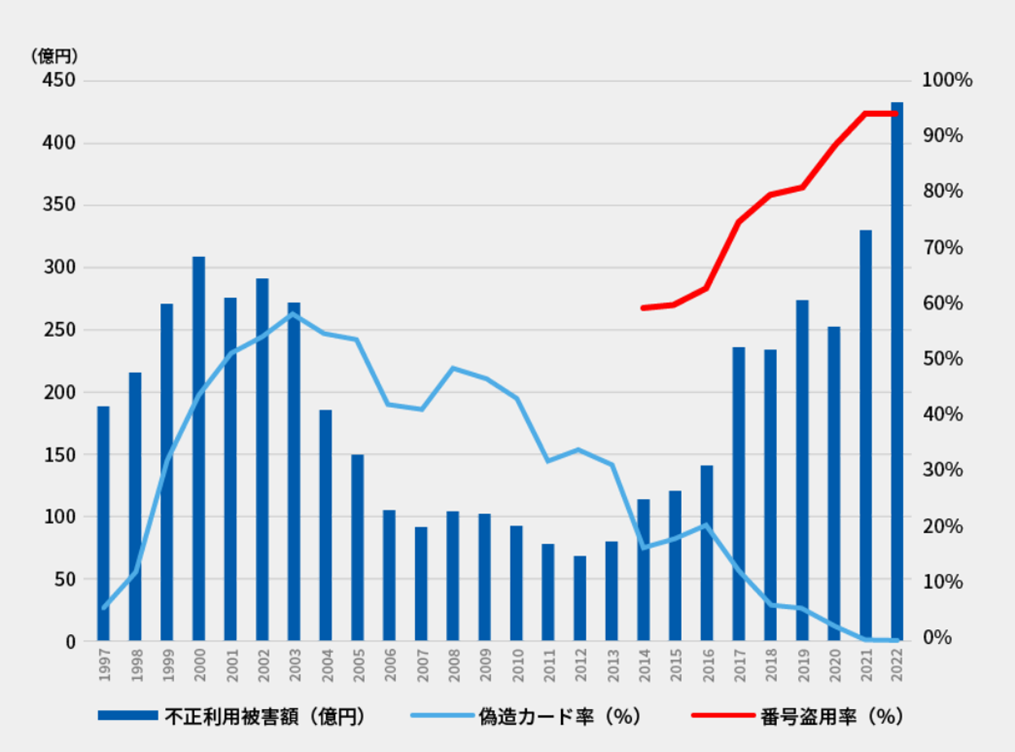
The reason for the increase in chargeback is the increase in damage caused by credit card fraud in recent years. According to the Japan Credit Association, the amount of credit card fraud damage throughout 2022 was 43.7 billion yen, the highest ever. More than 90% of them are victims of number theft.

Quoted from the Japan Credit Association, "Aggregate Results and Correction of Credit Card Fraud Damage" (March 31, 2023)https://www.j-credit.or.jp/download/news_202300000195.pdf

Naturally, chargeback is also increasing. Against this background, it can be said that e-commerce businesses should place special importance on fraud measures.

4. chargeback measures that e-commerce businesses should implement

4.1. Risks and the importance of countermeasures for e-commerce businesses

As mentioned above, when a chargeback occurs, the amount covered by chargeback is offset from the e-commerce business's sales, and the product or service itself is extremely unlikely to be returned, which can be a great loss for the e-commerce business. The damage is great, especially if you are dealing with high-value items or items that can be resold.
Additionally, if a large number of chargeback occur within a certain period of time, the credit card company may consider you a "fraudulent merchant" and reduce your payment approval rate. In addition, "fraudulent merchants" are obliged to introduce more fraud countermeasures, which will lead to an increase in countermeasure costs.

In addition, Japan Credit Card Association requires e-commerce businesses to strive to manage and take measures against credit card fraud, so they should consider early action and the introduction of preventive measures.
chargeback can mitigate its impact by taking appropriate measures, so here are some effective measures:

4.2 Introduction of EMV 3-D Secure (3D Secure 2.0)

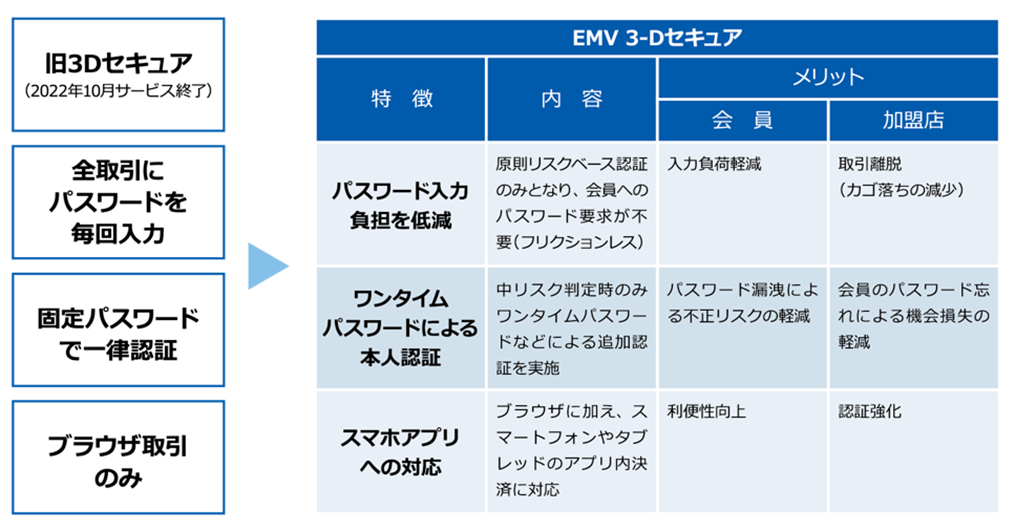
One of the measures that e-commerce businesses can take against credit card fraud chargeback is the introduction of "EMV 3-D Secure (3D Secure 2.0)". EMV 3-D Secure (3D Secure 2.0) is one of the ways to enhance security (identity verification) in online transactions. Implementing EMV 3-D Secure (3D Secure 2.0) can help verify cardholder legitimacy and reduce fraud and chargeback risks.

EMV 3-D Secure (3D Secure 2.0) has fewer concerns about lower purchase rates, such as the risk of dropping out of the basket, compared to 3-D Secure 1.0. One of the major benefits of implementing EMV 3-D Secure (3D Secure 2.0) is the merchant's chargeback exemption. In the event of a fraud in a transaction authenticated with EMV 3-D Secure (3D Secure 2.0), the merchant's chargeback burden is waived in principle and the responsibility is transferred to the card issuer (issuer).

4.3. Other chargeback countermeasures

Other chargeback measures include:

(1) chargeback Insurance (chargeback Securing sales even "chargeback Compensation Group Insurance" | GMO Payment Gateway)
chargeback insurance is a mechanism in which a certain amount of money is guaranteed when chargeback occurs by paying a certain premium. A major advantage is that costs can be leveled out with monthly premiums.

(2) Utilization of fraud detection system (attribute behavior analysis) (Forter|GMO payment gateway)
The fraud detection system is a mechanism that prevents fraud by verifying various information of users when using credit cards on e-commerce sites, etc. Compared to manual measures such as visual inspections, advanced fraud detection is possible with less effort.

(3) Security Code Request
Security Code is a three-digit number on the back of your credit card (AMEX is a table of four digits) that is used to verify that you are the cardholder. By requiring e-commerce service users to enter Security Code, you can strengthen your fraud measures.

(4) Visual check of order information
Visual inspection is one of the fraud countermeasures that e-commerce businesses can do manually. Especially when dealing with high-risk products with high resale value, it is important to check the order information in detail. If the number of orders is large, there is a limit to manual visual inspection, so it is recommended to design the operation rules well and use them in conjunction with other countermeasures.

5. Conclusion

As mentioned above, the number of chargeback cases has increased with the increase in credit card fraud damage in recent years. chargeback can be a significant risk factor for merchants, but understanding how it works, what causes it, how it occurs, and how it occurs, and taking appropriate measures can help mitigate it. It is better to consider specific measures as soon as possible. Credit card fraud tactics are getting more sophisticated, and there's no perfect solution. It is important to continuously strengthen measures.

GMO-PG recommends the introduction of "EMV 3-D Secure (3D Secure 2.0)" as a countermeasure against chargeback.

For our member stores, the person in charge will explain the details, so please contact us below or to our sales representative.

→ For GMO PG Multi-Payment Service merchants
For inquiries about "EMV 3-D Secure (3D Secure 2.0)", please use the following URL.
 https://contact.gmo-pg.com/m?f=791

PX+ Editorial Department

Author

PX+ by GMO Editorial Department


The PX+ by GMO editorial team is a dedicated media team specializing in the payment and Payment Experience (PX, payment experience) area by GMO Payment Gateway.
payment ・Based on the latest trends and practical know-how related to e-commerce operations and cashless in general, as well as examples of growing companies, we compile and supervise practical and reliable information that is useful for business growth.

Click here for the purpose of "PX+ by GMO" and the list of supervisors.

Ask questions and consult with the editorial department
Back to list